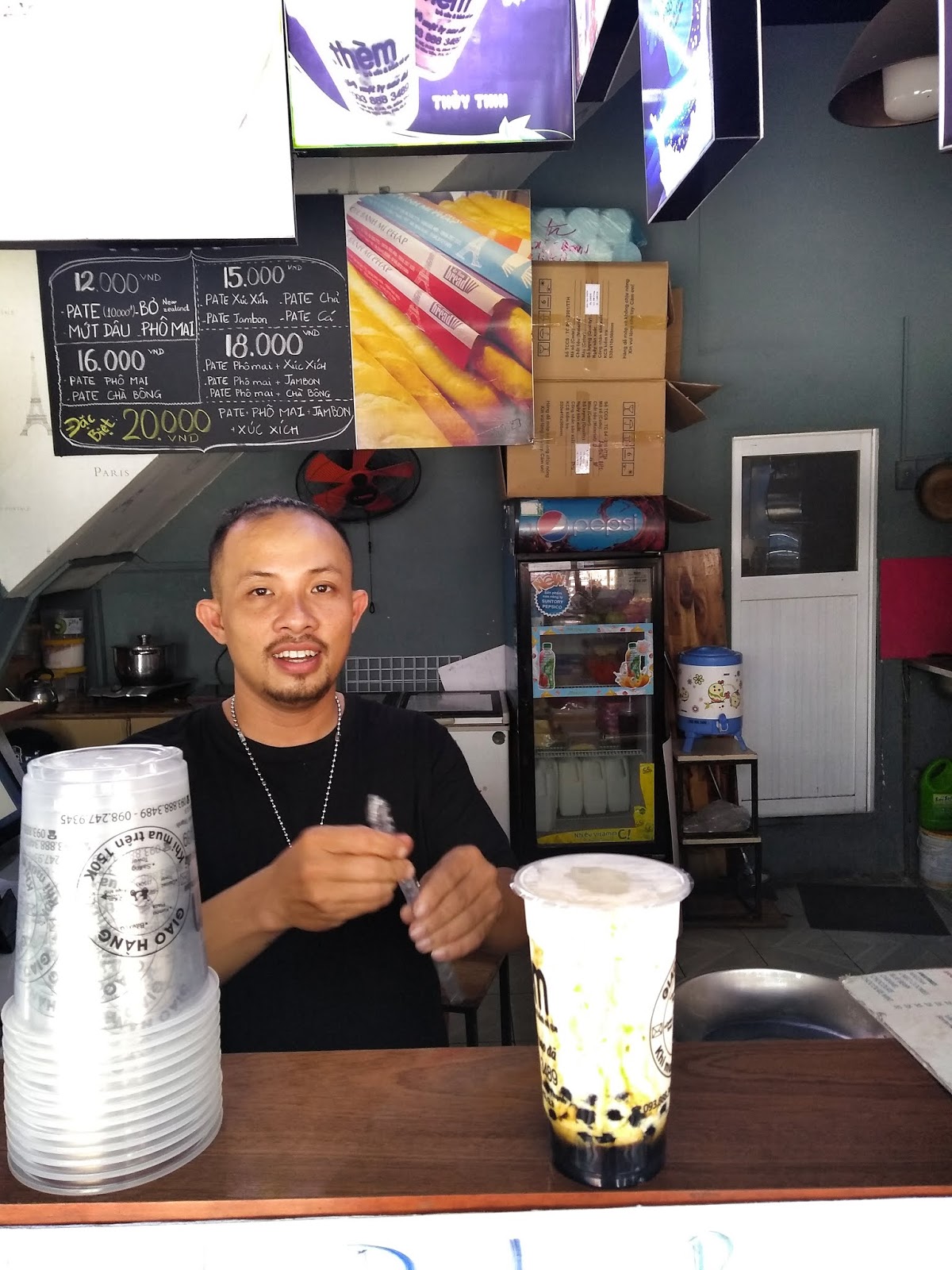
Since I had to leave for church at 7.30 am I had arranged with Ms.
Yang to have breakfast at 7 am. There is a table, a few chairs and a garden bench
in the small courtyard of the homestay. Tropical shrubs and leafy plants stud
the periphery of the courtyard. Golden, the pet Labrador, is a permanent
occupant of a part of the courtyard in the morning. Ms. Yang served me a
fantastic glass of hot Vietnamese coffee to start the day’s proceedings. Soon
came a large portion of cheese filled omelette and cut fruits. All served with
smiles and small talk.
Since I had to leave for church at 7.30 am I had arranged with Ms.
Yang to have breakfast at 7 am. There is a table, a few chairs and a garden bench
in the small courtyard of the homestay. Tropical shrubs and leafy plants stud
the periphery of the courtyard. Golden, the pet Labrador, is a permanent
occupant of a part of the courtyard in the morning. Ms. Yang served me a
fantastic glass of hot Vietnamese coffee to start the day’s proceedings. Soon
came a large portion of cheese filled omelette and cut fruits. All served with
smiles and small talk.
 When Tung and his wife came down to go in their scooter to
church Ms. Yang helped me install the Grab Bike App and she made the first
booking for me. The green jacketed and helmeted biker soon arrived at the
homestay and he handed over a Grab bike helmet for my use. This is one thing
that struck me in HCMC. Helmets are worn by all – driver and pillion alike –
and there are never more than two to a bike. The helmets were of different shapes
and sizes, but they were always used. I even saw a dog being ferried on a bike
and a helmet like equipment had been strapped on its head! had some difficulty
wearing the helmet and the driver smilingly helped me with it. He got me to the
church soon and I paid the fare mentioned by the App at the time of booking,
VND 14000. There was no haggling or talk about the fare at all. This impression
of mine would be dented somewhat soon, I didn’t know then.
When Tung and his wife came down to go in their scooter to
church Ms. Yang helped me install the Grab Bike App and she made the first
booking for me. The green jacketed and helmeted biker soon arrived at the
homestay and he handed over a Grab bike helmet for my use. This is one thing
that struck me in HCMC. Helmets are worn by all – driver and pillion alike –
and there are never more than two to a bike. The helmets were of different shapes
and sizes, but they were always used. I even saw a dog being ferried on a bike
and a helmet like equipment had been strapped on its head! had some difficulty
wearing the helmet and the driver smilingly helped me with it. He got me to the
church soon and I paid the fare mentioned by the App at the time of booking,
VND 14000. There was no haggling or talk about the fare at all. This impression
of mine would be dented somewhat soon, I didn’t know then.
 The Huyen Si Catholic Church was built in 1859 and ranks as the
oldest catholic church in the city and the second biggest after the Notre Dame
Cathedral. The church built in Gothic style with Romanesque elements has a tall
spire with four bells and an impressive nave. The site for the church as well
as substantial funds for its building came from one of the richest sons of the
city, Huyen Si, in whose name the church is now known. The mausoleum of the benefactor
and his wife is within the church. Right in front of the main entrance of the
church is a statue of St Mattheu Le Van Gam, a martyred Vietnamese priest
beatified in 1900. To the side of the church is a large grotto of Our Lady of Lourdes
where devotees come in large numbers to light incense and votives and pray. The
large number of testimonial plaques that adorn the wall inside the grotto and
beside it speaks volumes for the blessings the faithful have received from Our
Lady. There are numerous other statues and shrines in the church complex. Recently
added is a Chapel of Rest, where people go to pray for their dear departed. The
Sunday service was in Vietnamese, but faith is sans language. I was amazed by
the large gathering for the service and the fervor among those who had filled
the church that morning. It was a truly elevating experience and brought home
the fact that Christianity was still alive. Later Tung surprised me even more
by saying that Vietnam has the fifth largest population of Catholics in Asia.
It is apparent that family as a unit is very strong in Vietnamese society.
The Huyen Si Catholic Church was built in 1859 and ranks as the
oldest catholic church in the city and the second biggest after the Notre Dame
Cathedral. The church built in Gothic style with Romanesque elements has a tall
spire with four bells and an impressive nave. The site for the church as well
as substantial funds for its building came from one of the richest sons of the
city, Huyen Si, in whose name the church is now known. The mausoleum of the benefactor
and his wife is within the church. Right in front of the main entrance of the
church is a statue of St Mattheu Le Van Gam, a martyred Vietnamese priest
beatified in 1900. To the side of the church is a large grotto of Our Lady of Lourdes
where devotees come in large numbers to light incense and votives and pray. The
large number of testimonial plaques that adorn the wall inside the grotto and
beside it speaks volumes for the blessings the faithful have received from Our
Lady. There are numerous other statues and shrines in the church complex. Recently
added is a Chapel of Rest, where people go to pray for their dear departed. The
Sunday service was in Vietnamese, but faith is sans language. I was amazed by
the large gathering for the service and the fervor among those who had filled
the church that morning. It was a truly elevating experience and brought home
the fact that Christianity was still alive. Later Tung surprised me even more
by saying that Vietnam has the fifth largest population of Catholics in Asia.
It is apparent that family as a unit is very strong in Vietnamese society.
 Once service was over people spent a lot of time wishing each
other and exchanging pleasantries with priests. When I was worshipping near the
grotto Tung came up in his scooter and said that he would like to buy me a Pho
breakfast in a restaurant reputed for the traditional Vietnamese dish. Pho,
pronounced ‘fur’, is a rice noodle soup with broth, chopped scallions, green
herbs, with segments of lime, chili and garlic and plenty of meat, usually either
chicken or beef. I took a Grab bike and reached Pho Hoa Pasteur, the casual
chain that reportedly serves the best Pho in HCMC. Pho, along with Bahn Mi,
occupies a central position in the diet of the Vietnamese. At a table which we
got with some difficulty because it was full, Tung helped me choose my Pho. I
decided to have well done flanks of beef in the Pho. Besides the ordered dish
the table had servings of Banh Cam, which is a sweet rice flour ball covered
with white sesame seeds filled with sweetened mung bean paste, Cha Hue which is
Vietnamese version of ham made of lean pork, tapioca flour, garlic, black
pepper and fish sauce steamed in pandan leaf and Banh Xu Xe which is made of
rice and mung bean stuffing wrapped in a box of pandan leaf. Traditionally, the
last named was given by the suitor, but is now a widespread dessert.
Once service was over people spent a lot of time wishing each
other and exchanging pleasantries with priests. When I was worshipping near the
grotto Tung came up in his scooter and said that he would like to buy me a Pho
breakfast in a restaurant reputed for the traditional Vietnamese dish. Pho,
pronounced ‘fur’, is a rice noodle soup with broth, chopped scallions, green
herbs, with segments of lime, chili and garlic and plenty of meat, usually either
chicken or beef. I took a Grab bike and reached Pho Hoa Pasteur, the casual
chain that reportedly serves the best Pho in HCMC. Pho, along with Bahn Mi,
occupies a central position in the diet of the Vietnamese. At a table which we
got with some difficulty because it was full, Tung helped me choose my Pho. I
decided to have well done flanks of beef in the Pho. Besides the ordered dish
the table had servings of Banh Cam, which is a sweet rice flour ball covered
with white sesame seeds filled with sweetened mung bean paste, Cha Hue which is
Vietnamese version of ham made of lean pork, tapioca flour, garlic, black
pepper and fish sauce steamed in pandan leaf and Banh Xu Xe which is made of
rice and mung bean stuffing wrapped in a box of pandan leaf. Traditionally, the
last named was given by the suitor, but is now a widespread dessert. 

 It was now time to move away from the breakfast table. I had a
glass of sugarcane juice to polish off the huge breakfast. The versatility of
Pho is that it could be had at any time of the day, be it breakfast, lunch or
dinner. In my case I was sure that my stomach will not ask for another meal
till its dinner time! From the Pho Hoa Pasteur I took a Grab bike to the Thien Hau
Pagoda, which is an 18th century Chinese style temple. Incense coils hung on
steel rods below the ceiling is a specialty of the temple. The deity of the
temple is Goddess Mazu, the deified form of a Fujianese girl who is reported to
have saved some of her family members from a typhoon with her spiritual powers.
The golden image of the goddess dominates the main altar in the temple. From
the temple the Binh Tay market in Chinatown wasn’t very far away. The Binh Tay market
reminded me of the Crawford Market in Mumbai. Narrow lanes and stuffed
wholesale and retail shops selling everything from textiles to condiments and
motorized bikes ferrying large parcels of goods was a different flavor of the
city. Most of the shopkeepers were indifferent, possibly because they sensed
that I was only there to check out prices!
It was now time to move away from the breakfast table. I had a
glass of sugarcane juice to polish off the huge breakfast. The versatility of
Pho is that it could be had at any time of the day, be it breakfast, lunch or
dinner. In my case I was sure that my stomach will not ask for another meal
till its dinner time! From the Pho Hoa Pasteur I took a Grab bike to the Thien Hau
Pagoda, which is an 18th century Chinese style temple. Incense coils hung on
steel rods below the ceiling is a specialty of the temple. The deity of the
temple is Goddess Mazu, the deified form of a Fujianese girl who is reported to
have saved some of her family members from a typhoon with her spiritual powers.
The golden image of the goddess dominates the main altar in the temple. From
the temple the Binh Tay market in Chinatown wasn’t very far away. The Binh Tay market
reminded me of the Crawford Market in Mumbai. Narrow lanes and stuffed
wholesale and retail shops selling everything from textiles to condiments and
motorized bikes ferrying large parcels of goods was a different flavor of the
city. Most of the shopkeepers were indifferent, possibly because they sensed
that I was only there to check out prices!


I booked a Grab bike to go to the Saigon Zoo and Botanical Garden and promptly a biker turned up. I didn’t think it amiss at the time that the driver was neither wearing a grab jacket or the trademark helmet. When I was wearing the helmet, I told him my destination and he said that he knew where to go. The App showed that I would have to pay a fare of VND 34000. He took off and seemed to have gone a very long distance when I reiterated the destination a couple of times. After what felt way beyond the rote he stopped to check the route and found that he was way off. He started cursing his luck and got back to the right path after many detours and U-turns. Finally, after nearly 45 minutes on the road I was at the entrance to the botanical gardens. When I gave him the fare mentioned by the App he refused and demanded three times that amount. I stood my ground and argued that it was his fault that he had lost the way. He started threatening me and I also became slightly aggressive. He collected a few people around him, but I did not budge. I told him that I would offer him no more than VND 40,000 and that he could take it if he wanted. After fuming some more he left with what I gave him. It was a grim reminder that there were bad eggs among the vast numbers of Grab bikers. However, I suspect that he was not an accredited one in the group, because I did not get the usual message to rate the drive after the trip was concluded.

 A walk in the Saigon Zoo and Botanical Garden can
tax your stamina in the hot and humid climate but is well worth a visit. The
premises were established in 1865 and is home now to a large variety of
mammals, reptiles, birds, ornamental plants and orchids. It is the largest Zoo
and Botanic Garden in Vietnam. Highlights of the walk in the zoo were a
friendly sparring match between two baboons, the show put on by a vain bear, a
nonchalant white tiger, a ‘train’ of busy otters and a curious Javanese
mongoose! It rained during the walk in the Zoo and the temperature dipped a
bit. At the exit of the Botanical Garden was the Museum of Vietnamese History.
When I peeped in I found that all the artifacts and displays were explained in
the local language. Therefore, I decided to give the museum a skip because I
knew I would not have gained any new information by just ‘looking’ at the
exhibits. Moreover. I was dead beat after the Zoo trip. I headed back to the
comfortable confines of the homestay, once again booking a Grab bike.
A walk in the Saigon Zoo and Botanical Garden can
tax your stamina in the hot and humid climate but is well worth a visit. The
premises were established in 1865 and is home now to a large variety of
mammals, reptiles, birds, ornamental plants and orchids. It is the largest Zoo
and Botanic Garden in Vietnam. Highlights of the walk in the zoo were a
friendly sparring match between two baboons, the show put on by a vain bear, a
nonchalant white tiger, a ‘train’ of busy otters and a curious Javanese
mongoose! It rained during the walk in the Zoo and the temperature dipped a
bit. At the exit of the Botanical Garden was the Museum of Vietnamese History.
When I peeped in I found that all the artifacts and displays were explained in
the local language. Therefore, I decided to give the museum a skip because I
knew I would not have gained any new information by just ‘looking’ at the
exhibits. Moreover. I was dead beat after the Zoo trip. I headed back to the
comfortable confines of the homestay, once again booking a Grab bike.

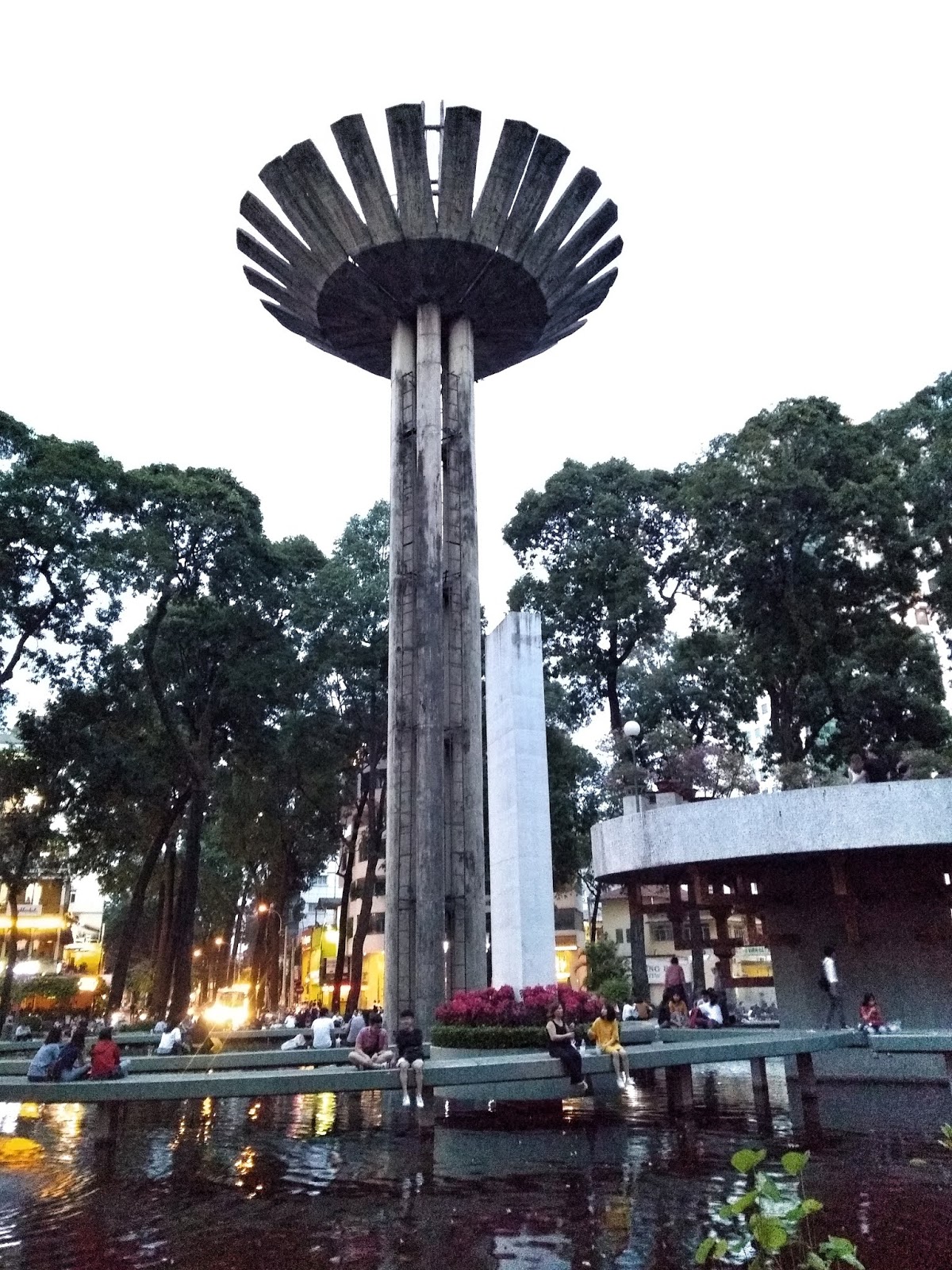 After proper rest I walked to the Turtle Lake,
which is a popular place for local food and the fountains attract a lot of
youngsters in the evening. I spent some time there in the hope that I can try
out some local favorite. However, my hopes were dashed because all the vendors
had stuff written in Vietnamese and I could not make head or tail of them. I
walked back to the homestay. On the way I picked up a cup of raw mangoes spiced
with chili and salt from a roadside vendor. It tasted so good that I decided to
skip dinner. En route I also marked the water puppetry show as a must visit in
the next two days. The corner shop that vended the banana delicacy was still
open and I bought a helping to have in the room.
After proper rest I walked to the Turtle Lake,
which is a popular place for local food and the fountains attract a lot of
youngsters in the evening. I spent some time there in the hope that I can try
out some local favorite. However, my hopes were dashed because all the vendors
had stuff written in Vietnamese and I could not make head or tail of them. I
walked back to the homestay. On the way I picked up a cup of raw mangoes spiced
with chili and salt from a roadside vendor. It tasted so good that I decided to
skip dinner. En route I also marked the water puppetry show as a must visit in
the next two days. The corner shop that vended the banana delicacy was still
open and I bought a helping to have in the room.